
Sunrise at Ogmore-by-Sea: four pictures in ninety minutes
On Saturday 10 October I was on the coast at Ogmore-by-Sea before the sun was up, which says a lot about my priorities. It was very windy and very cold, so this was not a gentle morning stroll down hill from the car park just before Ogmore.
My first picture was taken at about 7am and my last at about half past eight. In between, the light changed four times, and the sea was very rough the whole way through.
Two of these pictures make the water look like drifting mist. It wasn't. That was the camera telling a polite fib, and I'll own up to how it's done further down. Whether or not you ever pick up a camera, it is a fine reason to get out of bed early. The coast is lovely at that hour, and nobody is trying to sell you anything.
7am: before the sun
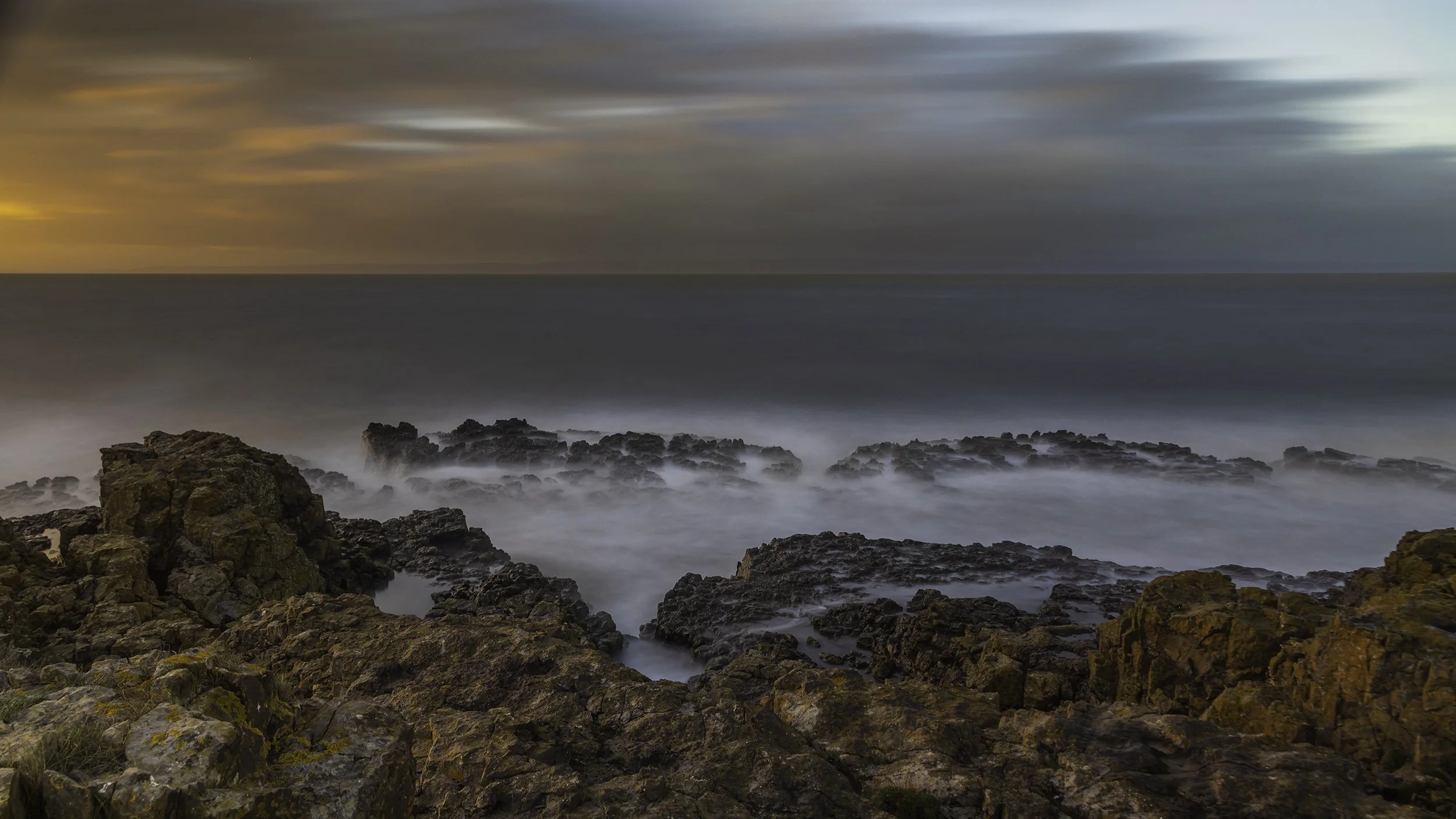
Ogmore-by-Sea, about 7am, before sunrise. The sea was rough. A long exposure has turned it to mist.
This was the first frame. The sky on the left is glowing orange with the colour that comes ahead of the sun. The clouds are dragged into long streaks because they moved while the shutter was open.
Look at the water, though. It looks like fog pouring between the rocks. The real sea was having a proper tantrum, and the camera politely ignored it. The shutter stayed open for a long time, and every wave blurred into the same soft white. The jagged limestone in the foreground, with its patches of yellow-green lichen, is the only thing that sat still and behaved itself.
First real light
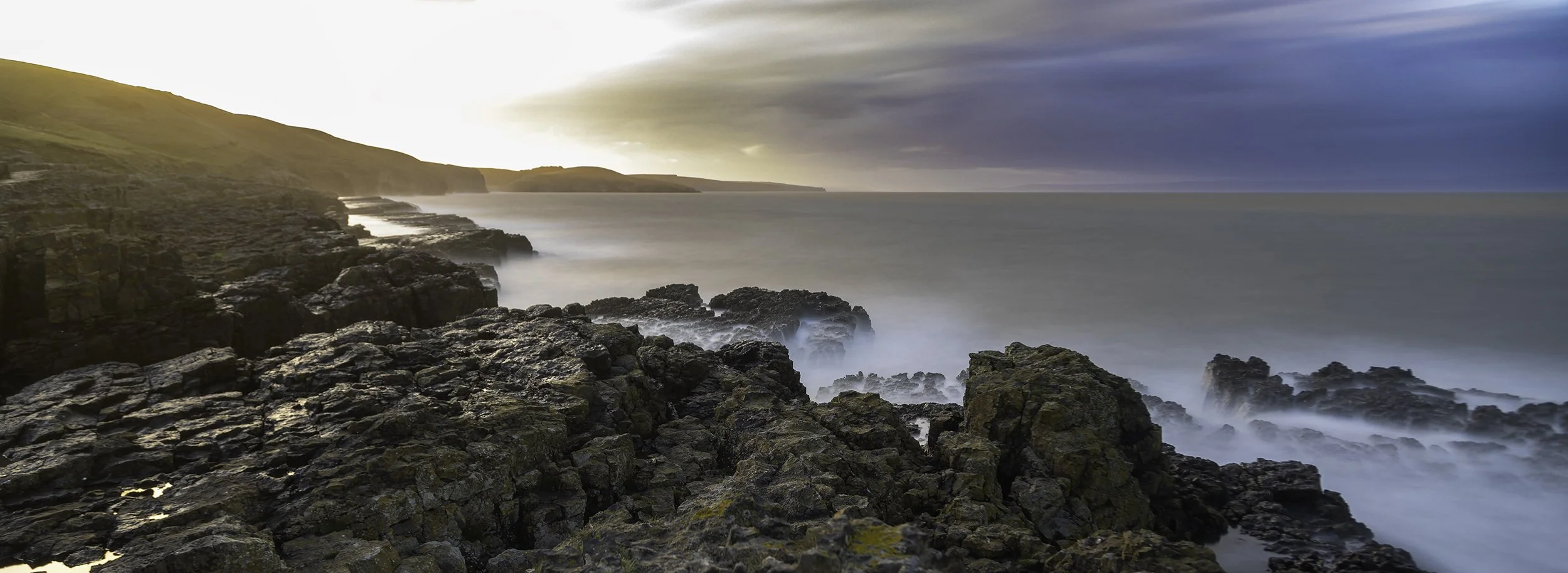
First light, with the sun still behind the hill over by Southerndown.The water looks calm here too, but that is the long exposure again
The sun was still hidden behind the hill on the left, so the sky there has burned out to near white, with a yellow edge. To the right, the clouds run from warm yellow to deep blue-purple.
The headlands fade away along the coast, each one fainter than the last. I like this frame for that sense of distance. Like the first picture, it makes the sea look gentler than it was. Never trust a long exposure for the weather forecast.
The sun comes over the hill
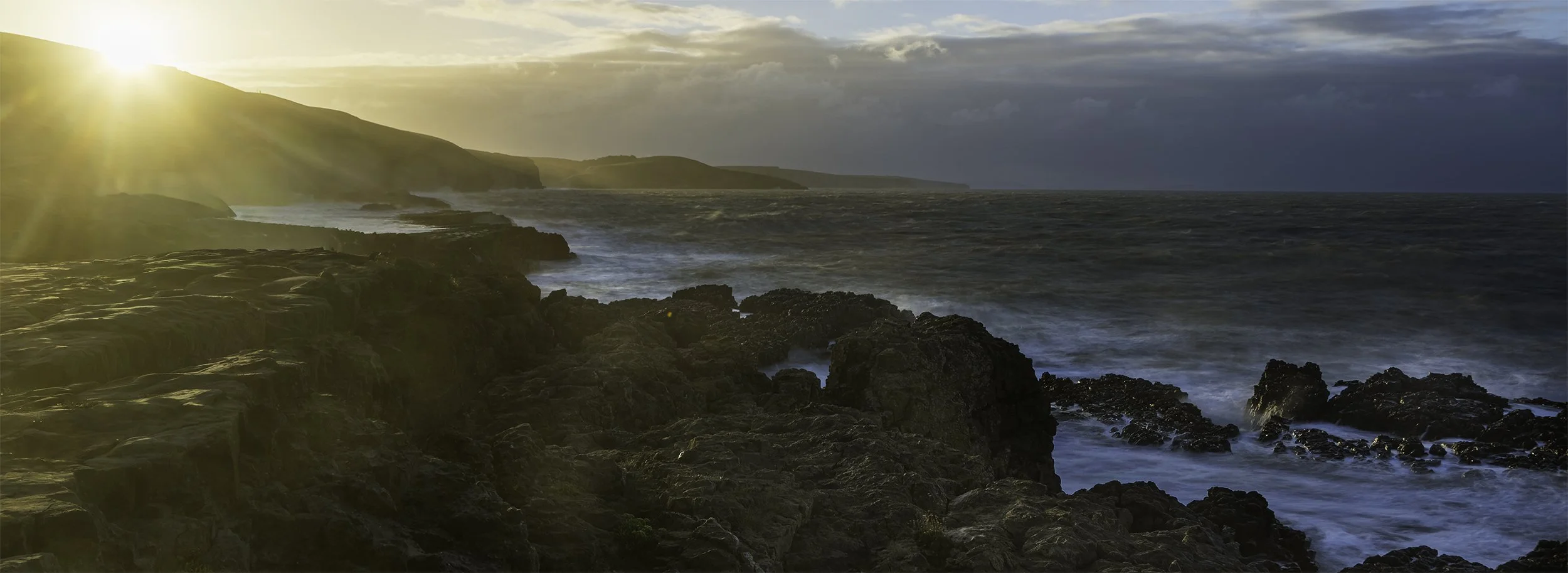
The sun breaks over the hilltop, and the rough sea finally shows.
This is the one that comes clean. The sun clears the hill, throws a starburst across the rocks, and you can see how rough the water really was. It is choppy, wind-whipped and breaking white over the ledges.
The shutter time was shorter here, so the waves keep their texture and energy. It is the same coast as the first two pictures, but the sea has stopped pretending. This frame is seven exposures blended into one frame, each at the shorter shutter time.
Looking the other way
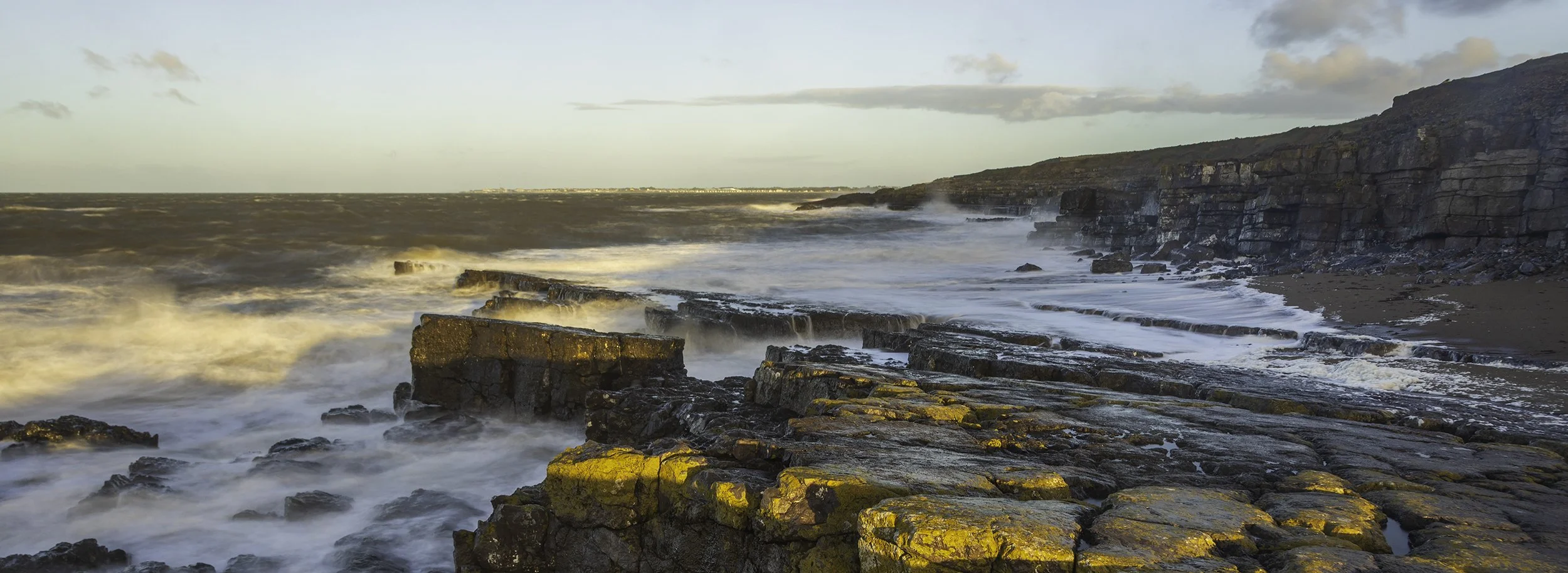
A few yards along, looking the other way. By 8:30 the sun was up and lighting the rocks and the spray
By about half past eight the sun was properly up. I moved just a few yards and turned round, so the sun was now behind me and lighting everything in front of me. I never had my back to the sea. I started out facing it, then turned left with the sea on my right, then turned round with the sea on my left.
The flat limestone ledges had gone gold on top, the spray was glowing, and the waves were breaking over the steps and running towards a small sandy beach. The cliffs rise on the right, still in shade, and on the far horizon there is a town. This was the best light of the morning, and I only found it by looking the other way.
If you take one thing from this blog, make it that. Whenever you are admiring a view, check what the light is doing behind you, but never with your back to the sea. The view in front is only half the story, and the rest is usually behind you, quietly getting on with it.
A word of warning: the sea was very rough
These rocks are beautiful, but they are not a place to take chances. Waves were breaking right over the flat ledges that morning, and wet limestone is slippery.
Stay well back from the edge, especially when the sea is rough
Never turn your back on the sea. If you want to look the other way, walk well back from the edge first
Wear shoes with proper grip. Wet limestone makes no allowance for confidence
Wrap up for the wind and the cold, because standing still with a camera makes you feel it more
Check the tide and the weather before you go. High tide was at 7am.
Tell someone where you are going
The sea was breaking about 10 yards from where I stood. I was on higher ground, and the spray reached my level but never touched me. That is exactly why I didn't go down to the lower rocks. If spray is reaching your level, stay where you are or move back. A longer lens helps, because you zoom in rather than walk closer. Your safe distance will depend on the day, so if in doubt, stay further back.
The mist effect comes from the long shutter time. The longer the shutter stays open, the smoother the water goes, even when the sea is rough. A shorter shutter time, as in the last two frames, keeps the waves looking like waves.
You don't need a bag full of lenses for this. One zoom, one filter and something steady to rest the camera on will do it. The camera shop will be disappointed.
Why go early
I shot four pictures in ninety minutes, and no two look alike. The same rocks, the same sea, and a different place every ten minutes or so.
You don't need a big camera, and you don't need to be a photographer. Wrap up warm, wear sturdy shoes, stay back from the edge, and go and watch the light come up. It's well worth the early start. Take a flask, and the sunrise won't mind.
My 2027 calendars are now available. If this coast takes your fancy, my 2027 calendars are now available in A4 and A3. You can have yours posted, or collect it free in Llantwit Major.