
Fresh From the Field
New additions to the archive. A study of light, movement, and the British coastline and countryside.
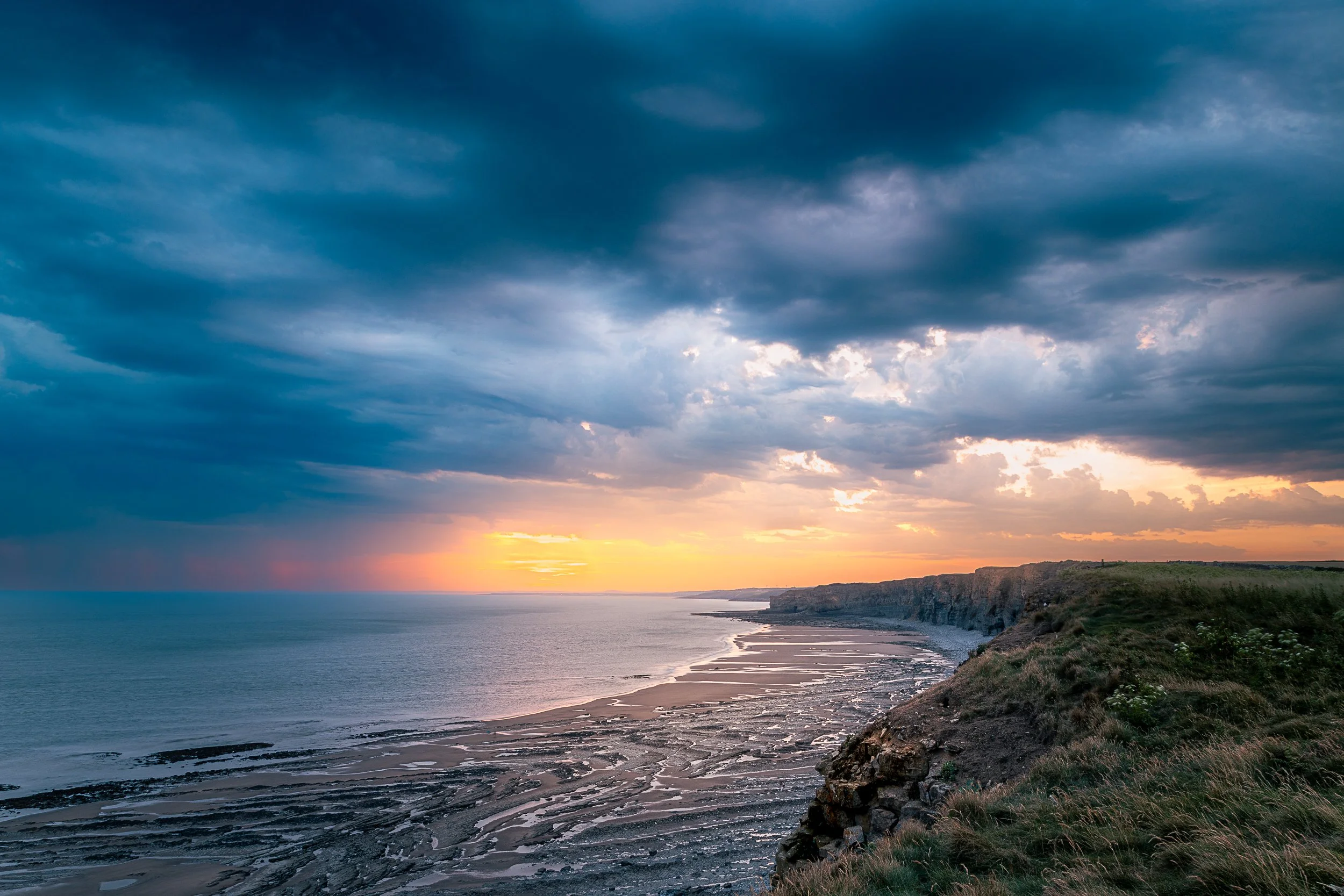
Sometimes the best photographs are never planned... and neither are my detours.
Last Thursday, I was driving home, minding my own business, when the sunset decided to put on a performance. Naturally, instead of carrying on like any sensible person, I thought, "That looks promising..." and promptly turned the car towards Nash Point. Thankfully, the camera was already in the boot—proof that I either plan ahead or have trust issues with Welsh weather.
By the time I reached the cliffs, Mother Nature had clearly decided one weather event wasn't enough. A storm was charging in from the west, lightning was flashing all around me, and I was beginning to question whether standing on an exposed clifftop with a tripod was one of my brighter ideas.
The sky, however, had other plans. Beneath all the moody clouds, the last of the sunset burst through the horizon, painting the Bristol Channel in warm gold while the storm tried its best to steal the show. Looking west, I managed to grab this shot just before the heavens opened and politely suggested it was time to leave.
It's funny really... people often imagine landscape photography as peaceful mornings, birds singing, and sipping coffee while waiting for the perfect light. The reality is usually sprinting across muddy fields, arguing with the wind, checking three weather apps that all disagree with each other, and wondering whether lightning can actually hit a tripod. (For the record... I didn't hang around long enough to find out.)
Looking back, I'm glad I ignored the sensible route home. That five-minute detour turned into one of those moments you simply can't plan—a dramatic sunset, an incoming storm, and just enough time to press the shutter before making a very quick retreat to the car.
Sometimes, the best photographs aren't found. They're chased... usually while getting slightly soaked.
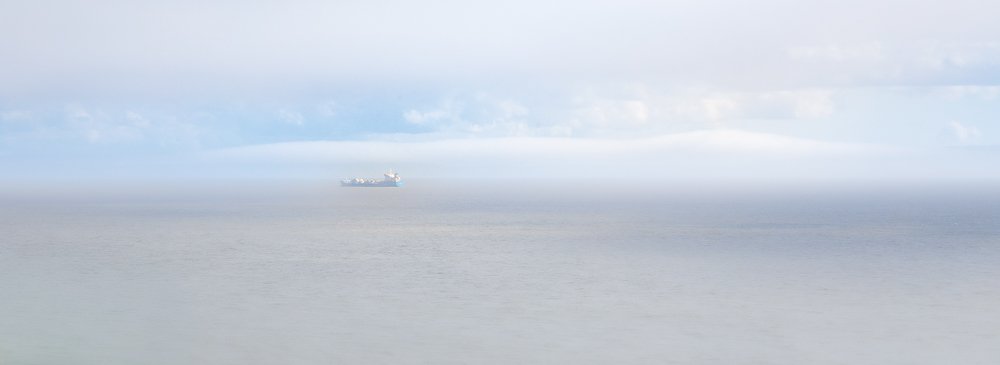
I was out by St Donat’s Lighthouse this afternoon. The Bristol Channel had completely vanished. Usually, it’s all grey-brown mud and movement, but the mist had settled in so thick you couldn't tell where the water ended and the sky started. It was just a wall of white.
Then this ship came out of nowhere. It didn't look real—just a flat, dark shape hanging in the middle of nothing. No sound, either. The fog seemed to swallow everything up, even the noise of the tide. I stood there for a while on the cliff path, just staring at it. It felt less like a landscape and more like looking at a blank canvas that someone had forgotten to finish. It’s rare to find that kind of quiet around here. Oddly unnerving, but I liked it.
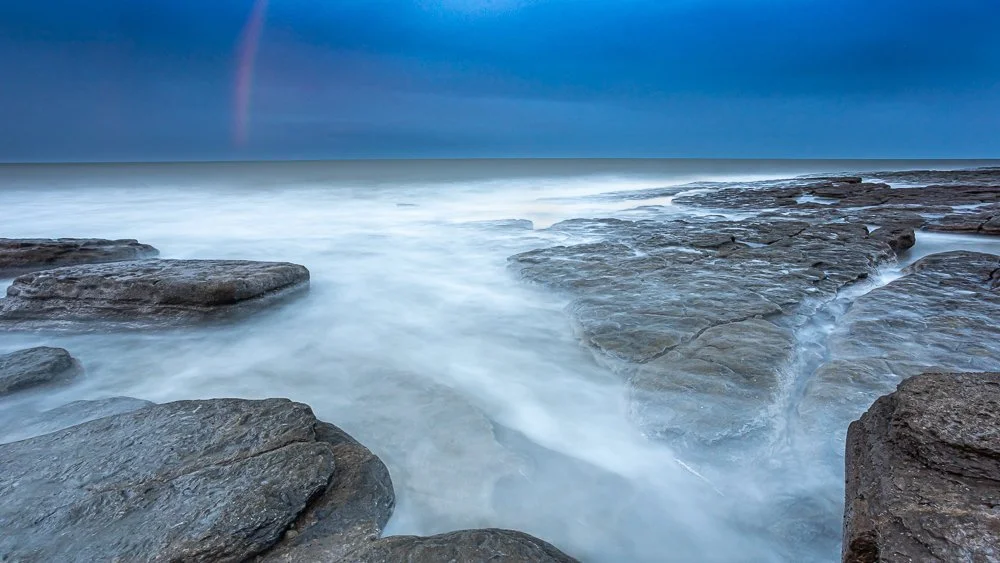
I got down to Southerndown before the sun was properly up. It was freezing. The tide was coming in over those big limestone shelves—it’s a weird effect, makes the water look like white smoke or silk, but you can still hear the slap of it against the stone.
The sky was a proper deep blue, almost bruised looking. Then this faint bit of a rainbow turned up on the left, just hanging there in the dark. It’s a strange, lonely spot at that hour. You’ve got these massive slabs of rock that look like a giant’s pavement, and not a single other person around to see it. Just me and the sound of the water rushing through the gullies. It’s better than coffee for waking you up, I’ll give it
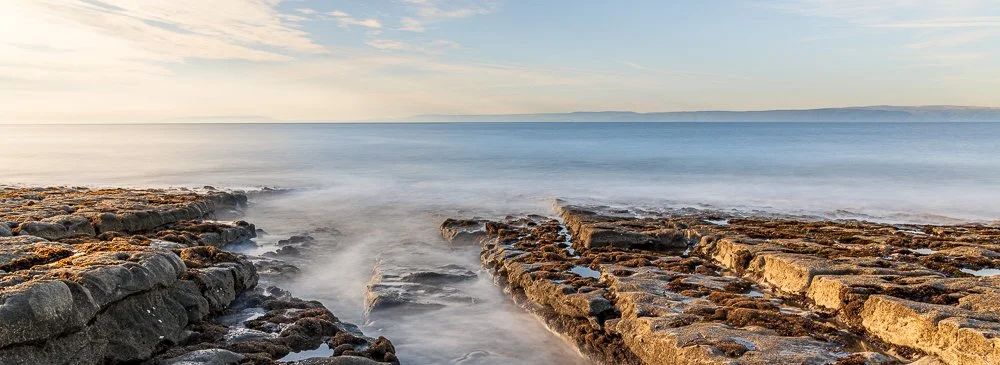
I kept walking further along from the main slipway. The rocks change out here—less like boulders and more like giant, cracked paving stones. The tide was doing that slow wash over them, making the water look like a thin layer of smoke.
The sun was still catching the ridges, but the channel further out had turned a heavy, solid blue. You can see Somerset over the water, just a hazy line on the horizon. It’s a bit of a scramble to get this far, but it's worth it just to get away from the noise. No crowds, just the sound of the sea pushing through the gaps in the stone. It’s funny how a ten-minute walk makes the place feel completely different. Much better.
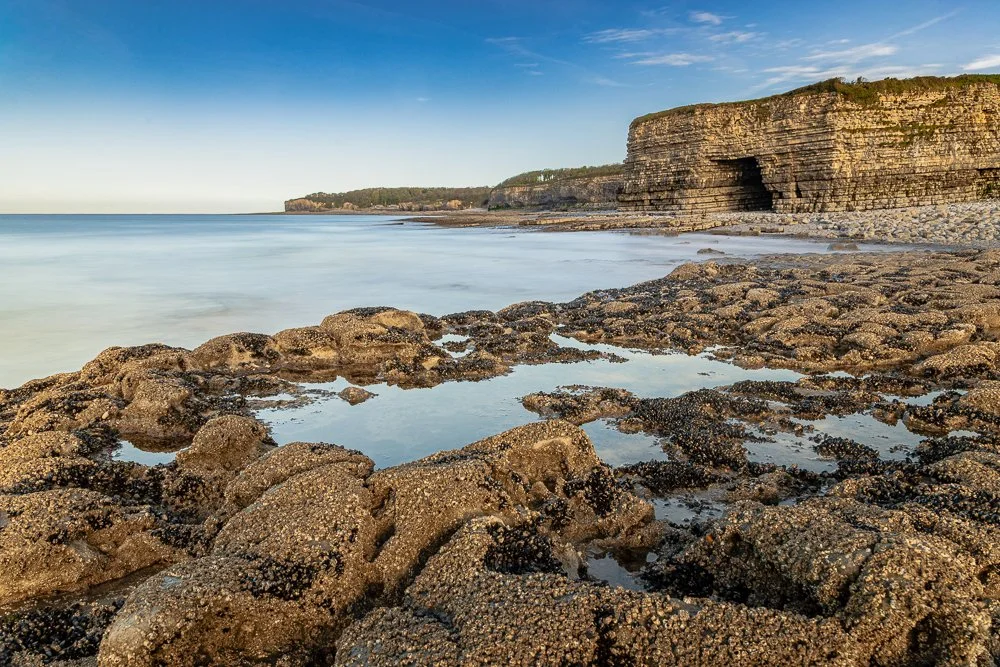
By the time I reached Tresilian, the tide had properly done a runner. It’s a bit of a head-scratcher, really—standing on those massive limestone shelves and trying to wrap your brain around the fact they were under six feet of water only a few hours ago. The Bristol Channel doesn't mess about.
Everything was slick with salt and weed, just an endless stretch of grey ridges and rock pools. You’ve really got to watch your ankles on those slabs. It felt a bit eerie, being out there. It’s like you’ve sneaked onto a bit of the planet that isn't supposed to be yours yet. No one else was around, just the damp smell of the sea and that huge, empty space. Weirdly quiet, but I’ll take it over the usual crowds any day.
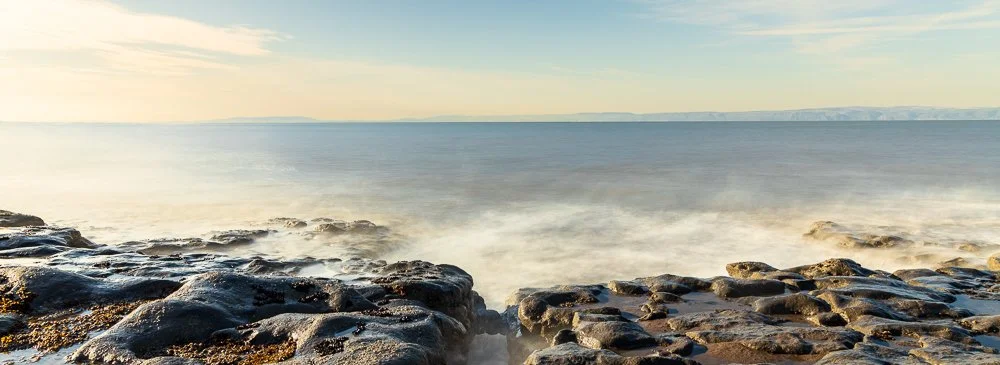
It is often the quiet moments of observation that yield the most compelling frames. This seascape, captured on the return from Tresilian Bay, perfectly illustrates the value of patience photography
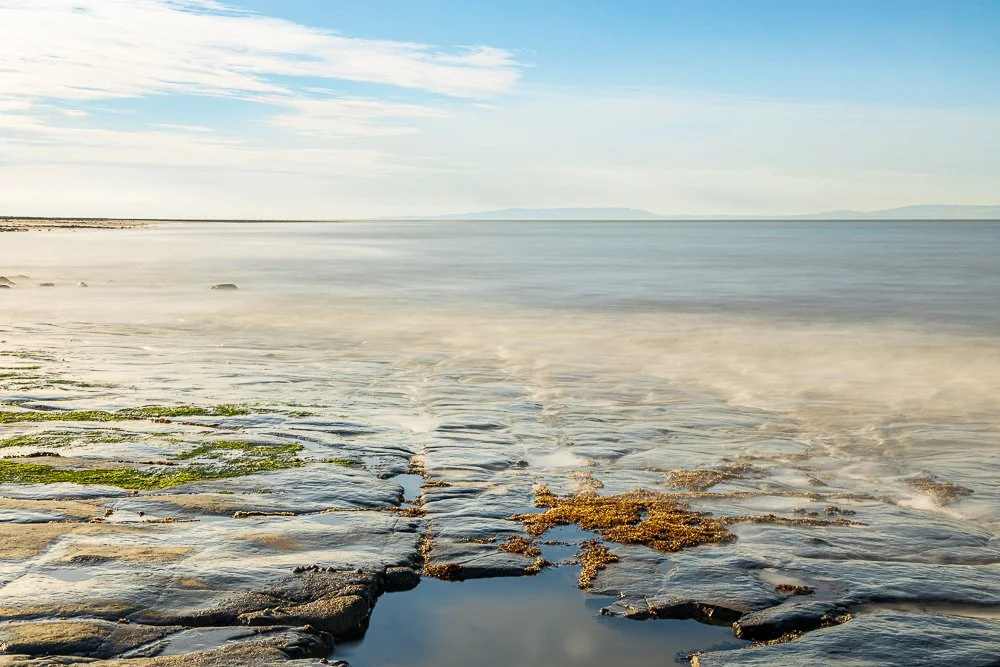
As the tide begins its slow retreat, the true character of the shoreline reveals itself. What was moments ago hidden beneath the grey-blue swell of the Bristol Channel is now a vibrant, textured landscape of limestone pavements and ancient geology. The receding water leaves behind a network of rock pools—still, dark mirrors that hold the sky—while the sudden exposure of bright green and amber seaweed adds a startling pop of colour against the muted tones of the wet stone. It is in these quiet, transitional moments, as the shoreline breathes out, that the most honest stories of the coast are found.
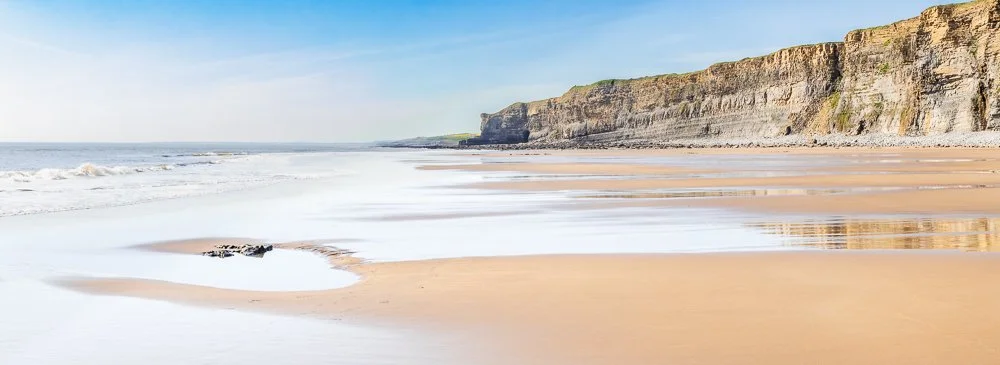
In the panoramic view you can see this transition in action. The receding water has smoothed the expanse of the beach, creating soft, glass-like reflections that mirror the towering cliffs of the Heritage Coast. It is this window of time—where the textures are wet enough to catch the light but exposed enough to reveal their form—that offers the most honest opportunities for a landscape photographer.