
Left-Hand Down a Bit: The Brutal, Beautiful Reality of Life on the Cut
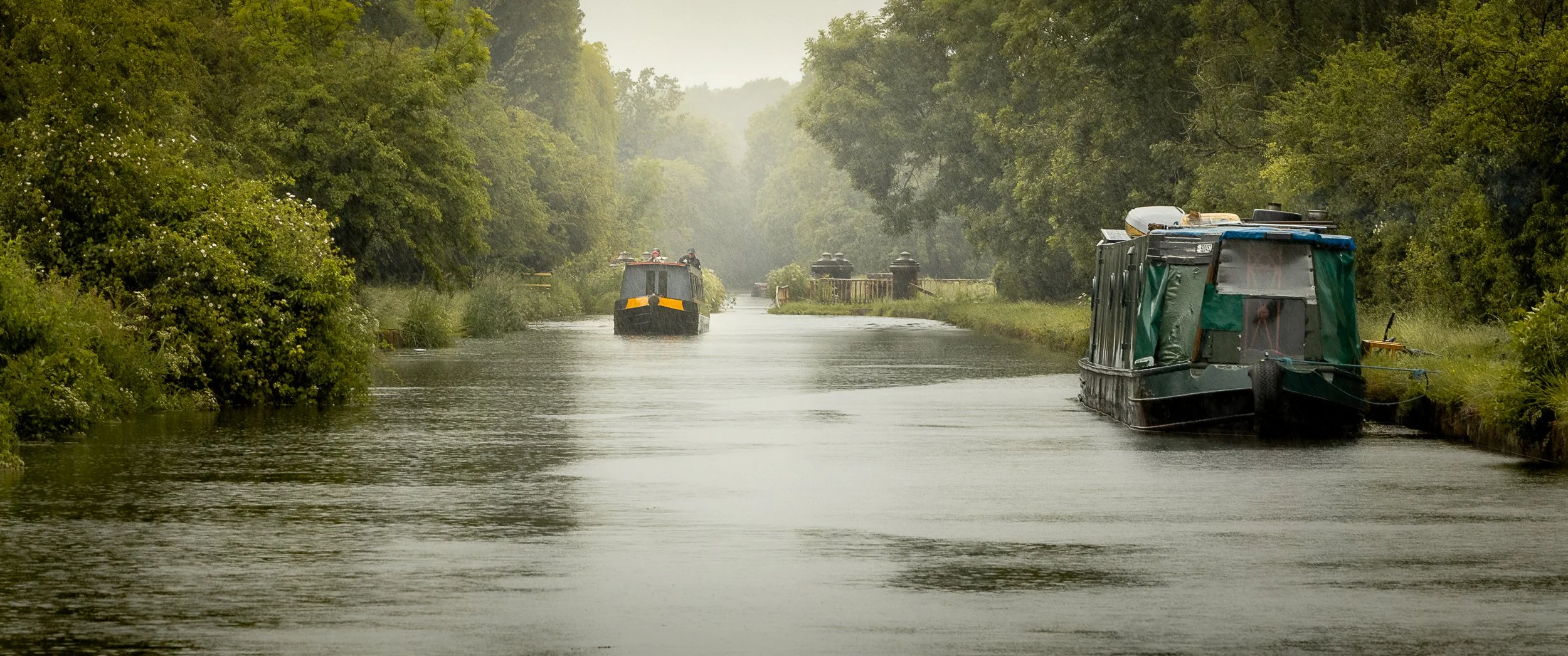
The weather forecast confidently promised wall-to-wall sunshine. Evidently, the clouds over Staffordshire had other plans. Still, there’s a quiet beauty to the cut when the drizzle sets in and everyone else retreats inside for a brew.
The forecast had confidently promised a gentle, dry introduction to canal life. The sky over Staffordshire, however, had clearly not read the script.
Instead, it was currently dumping a steady, relentless stair-rod drizzle directly down the back of my neck. I stood on the stern of a seventy-foot, twenty-ton steel tube, desperately trying to remember which way to push the tiller. Behind me, the hire basin had vanished; ahead lay a stone bridge archway that looked roughly the width of a postbox. Jayne was standing on the bow, a silhouette of bright yellow Gore-Tex, shouting something over the thrum of the diesel engine. Due to the wind, it sounded like: "We’re going to hit the..."
We didn’t hit it. Not quite. But the resounding, metallic clang of steel meeting two-hundred-year-old Cheshire sandstone certainly announced our arrival to the local duck population.
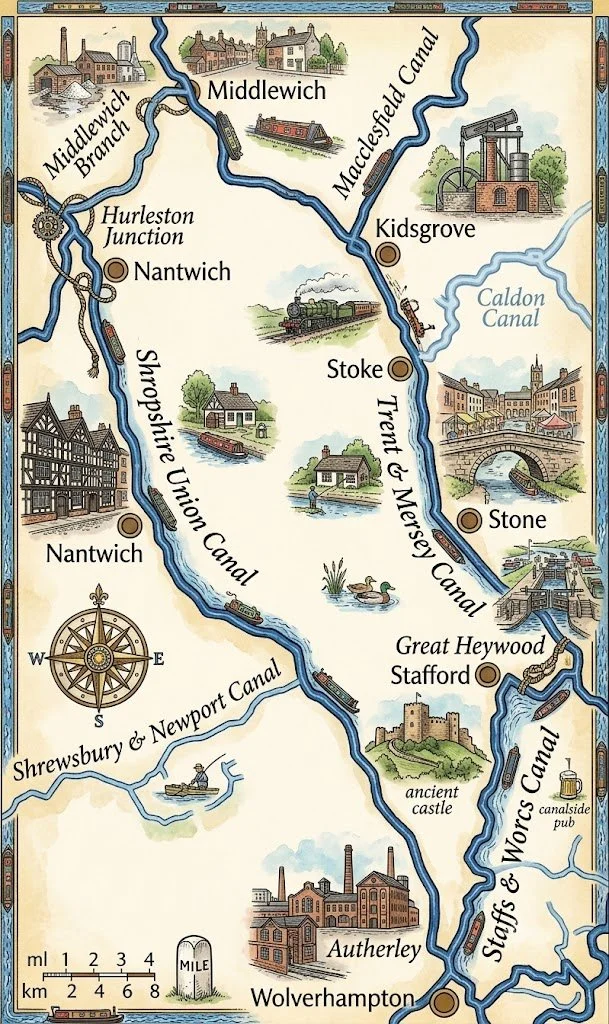
This was day one of our fortnight on the water, tackling the legendary Four Counties Ring—a watery loop linking the Trent & Mersey, the Staffordshire & Worcester, and the glorious, cutting-scarred Shropshire Union. If you’ve ever sat on your sofa on a rainy Tuesday evening, watching a television presenter drift lazily down a canal with a glass of wine in hand, thinking, “That looks like a peaceful way to spend a retirement fortnight,” let me gently pull back the curtain.
Why I Swapped the Coast for the Cut
As a photographer, my world is usually dictated by the dramatic, fast-shifting light of the South Wales coastline. I’m used to chasing tides, scrambling over wet rocks, and dealing with wild wind. The canals, however, had been whispering to me for years.
There is a quiet, industrial history woven into the very dirt of our inland waterways. These channels weren’t built for pleasure; they were the motorways of the 18th century, carved out by hand by men with shovels, beer, and gunpowder. I wanted to see the British countryside from six feet below the fields, to slow my life down to a walking pace, and to see how the light behaved when trapped in a long, glassy corridor of water.
There was also the physical challenge. At sixty-eight, I like to think I’ve still got plenty of gravel in my shoes. But deep down, I wanted to see if my knees, my lower back, and indeed my marriage could survive ninety locks and 110 miles of narrow water. Toby, our golden retriever, was left at home with a trusted sitter for this one. Having a large, water-obsessed dog on a seventy-foot boat while navigating deep locks is a recipe for an early bath and an unscheduled duck-chasing rescue mission. So, it was just Jayne, myself, and a very steep learning curve.
The Rhythm of the Water
By day three, the initial panic of steering had subsided into a deep, meditative rhythm. There is an extraordinary, mechanical patience to a canal boat. At four miles an hour, you cannot rush. If you try, the bow wave simply piles up, the stern digs in, and you actually go slower. The canal forces you to accept its pace.
We settled into a daily routine that felt almost monastic. The world looked completely different from the water. The towpaths were flanked by tall, nodding heads of cow parsley and wild hemlock, framing our view of the rolling Cheshire Plains.
In the deep cuttings, the stone walls were slick with green moss and ancient ferns, dripping with cold, fresh spring water. We would glide past old brick-built lock cottages, their chimneys puffing woodsmoke, and marvel at how a landscape so close to busy towns could feel so completely isolated.
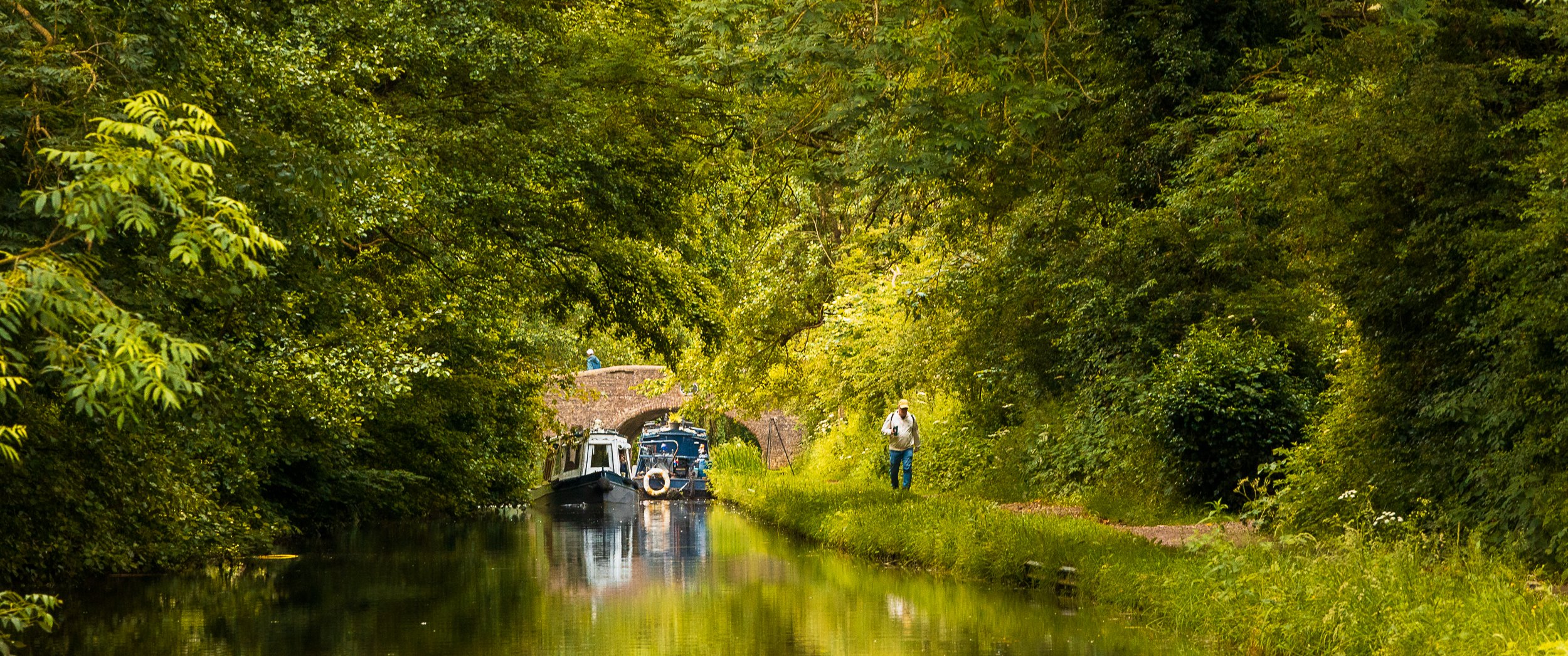
Trying my best to look like a rugged explorer pacing the towpath, though in reality, I was just trying to walk off that massive steak-and-ale pie from lunchtime while Jayne steered us safely under the bridge.
We walked as much as we boated. Jayne would often hop off at a lock and walk the towpath for a few miles, meeting me at the next flight. Without the rush of modern traffic, you begin to notice the small things: the metallic blue flash of a kingfisher darting across the bow, the smell of damp earth and coal smoke, and the polite, uniform nod of fellow boaters.
The people on the canal are a breed apart. There is an unspoken rule of instant camaraderie. You are all in the same slow-moving, slightly damp boat. We met retired teachers, former coal miners, and couples who had sold everything to live on the water. No one asked what we did for a living; they only wanted to know if we’d cleared the weed hatch lately or if the pub three miles down the cut was still serving food.
The Photography Diary: High Art vs. Low-Down Mud
On a canal holiday, photography is strictly compatible with survival. You cannot set up a heavy carbon-fibre tripod on a boat that is constantly drifting, nor can you spend three hours waiting for the perfect light when you have a flight of six locks to clear before sunset.
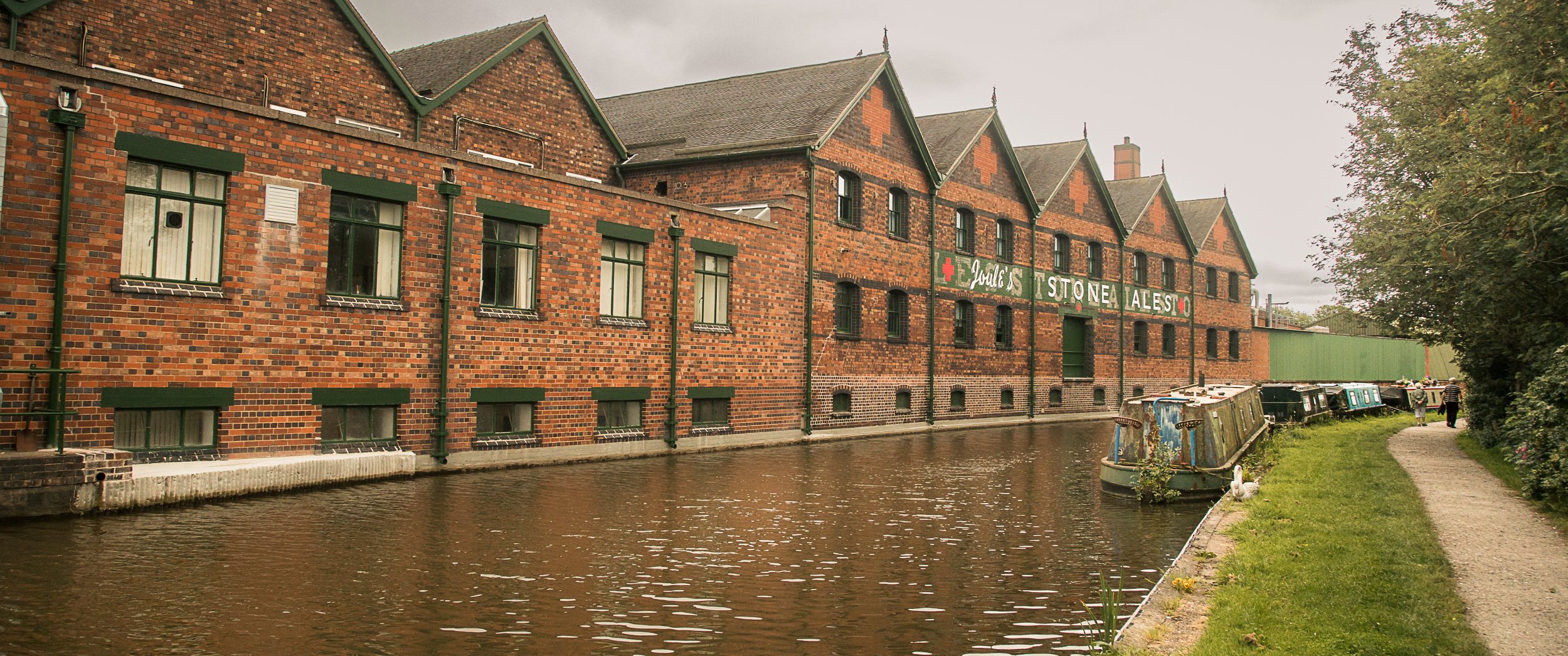
A magnificent piece of canal history. I spent a good ten minutes trying to work out how to tie up the boat and knock on the green door to ask for a sample, only for Jayne to gently point out that it’s now a listed landmark, not a drive-thru.
My raw catalog for this trip reveals a hilarious, split-personality approach to the journey. On one hand, I have the serious, slow-burn landscape work on the Canon EOS R: misty mornings, perfectly balanced compositions of weeping willows framing stone bridges, and long exposures of lock water. On the other hand, my phone camera was capturing the raw, muddy, and delicious reality of our daily existence.
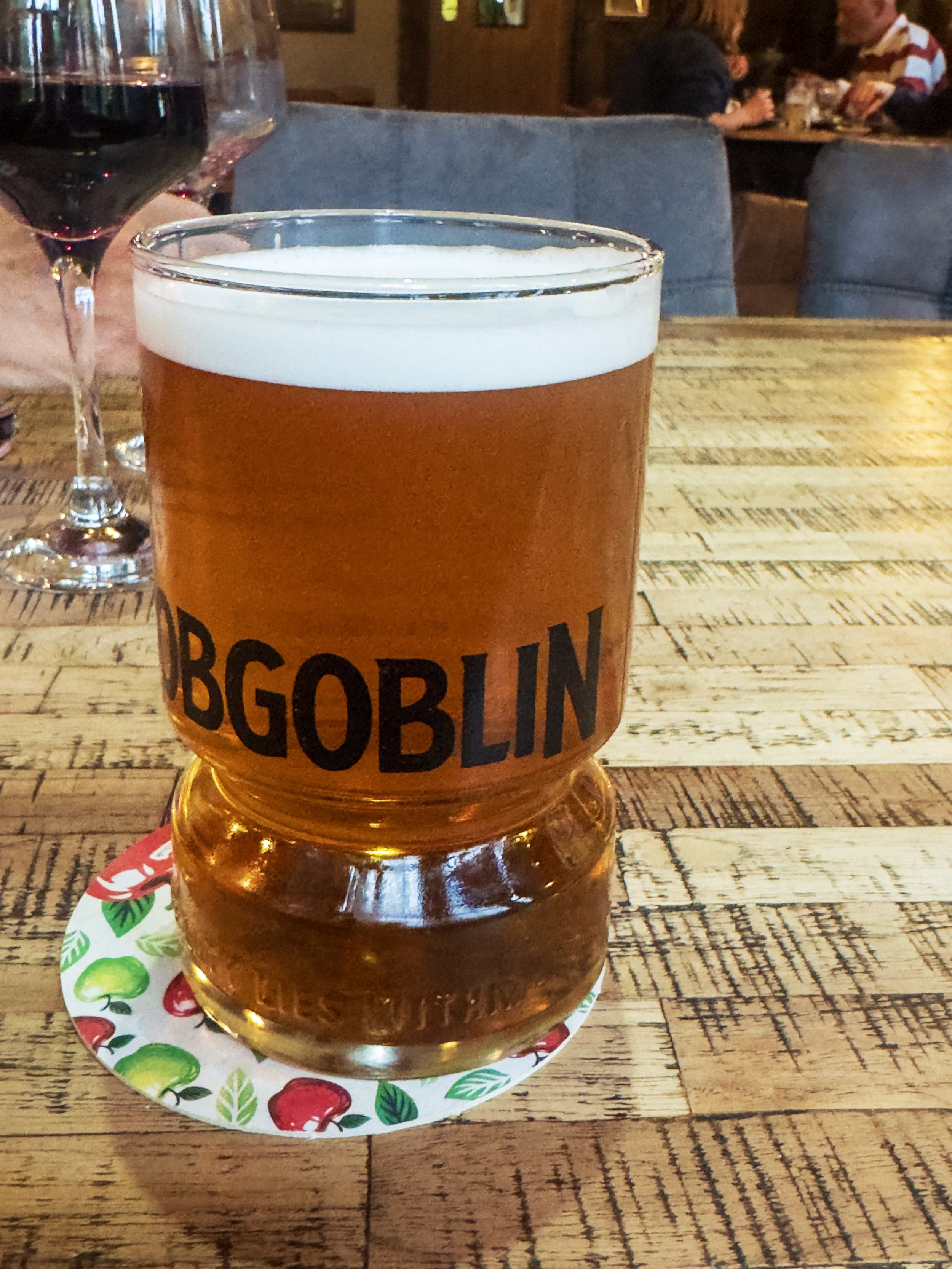
I wasn't planning to stop for a drink. Then I wrestled with three sticky lock gates in a crosswind, my lower back staged a small protest, and suddenly this pint of Hobgoblin appeared out of nowhere like a mirage. Liquid medicine for the working boater.
There’s a shot on my phone of a towering pint of Hobgoblin ruby beer resting on a scarred wooden pub table, the condensation dripping down the side of the glass. That image contains just as much truth about canal travel as any landscape. It represents the exact moment the physical graft of the day ended, the engine was switched off, and the shoulder muscles finally began to untie themselves.
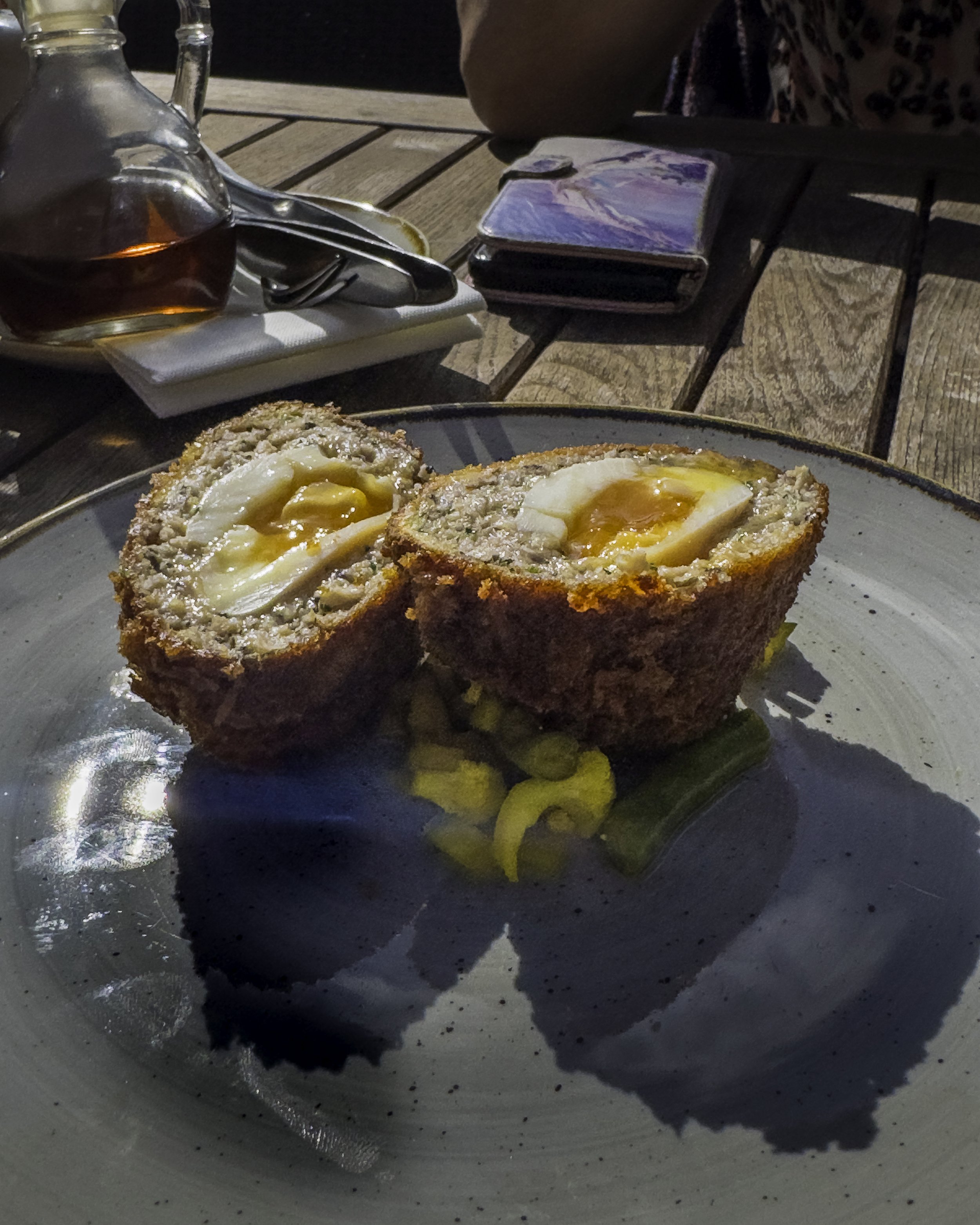
They tell you that narrowboating is all about the historic industrial architecture and the preservation of heritage waterways. Let's be honest, it's actually about steering seventy feet of steel toward whichever pub is currently frying homemade Scotch eggs with a perfectly runny, golden yolk.
Another candid phone frame shows a gourmet Scotch egg, sliced clean down the middle on a slate plate. The yolk is a perfect, rich orange, still slightly runny, served alongside sharp mustard pickles. We had pulled up, exhausted, at a beautifully restored canal-side inn. Jayne and I sat on a sun-bleached wooden bench, devouring that egg and a plate of towering steak-and-ale pie with thick, hand-cut chips, while the local mallards watched us with intense, feathered envy.
Then there are the transition shots—the ones that show the sheer verticality of the locks. I took a phone shot looking straight down into a empty, dripping stone chamber. The dark, mossy brickwork rises up like the walls of a medieval dungeon, with a slick, white metal ladder bolted into the side. Standing down there, looking up at the sky while seventy tons of water wait behind a creaking wooden gate, you realise just how much engineering—and physical trust—goes into every single mile of this journey.
One afternoon, the sky turned the colour of a bruised plum. We were tracking a long, straight stretch of the Shropshire Union toward a distant church spire. The clouds dropped low and heavy, casting a dramatic, dark shadow across the canal while a sliver of late afternoon sun managed to slice through the horizon.
I knew I had about five minutes before the heavens opened. I couldn't stop the boat—there was nowhere to tie up. I had to throttle the engine down to a crawl, hand the tiller to Jayne, and step onto the gunwale. The wind was catching my jacket, my fingers were slick with rain, and the boat was gently swaying.
I waited for the gap between two ancient weeping willows. Through the viewfinder, the canal looked like a long sheet of polished pewter, reflecting the dramatic sky, while the orange brick of a distant bridge provided the only pop of colour. I pressed the shutter just as the first heavy drops of rain began to crater the water's surface. It wasn't a "perfect" landscape shot, but it held the exact, gritty reality of that Tuesday afternoon.
My Favourite Photograph: Sunrise on the Cut
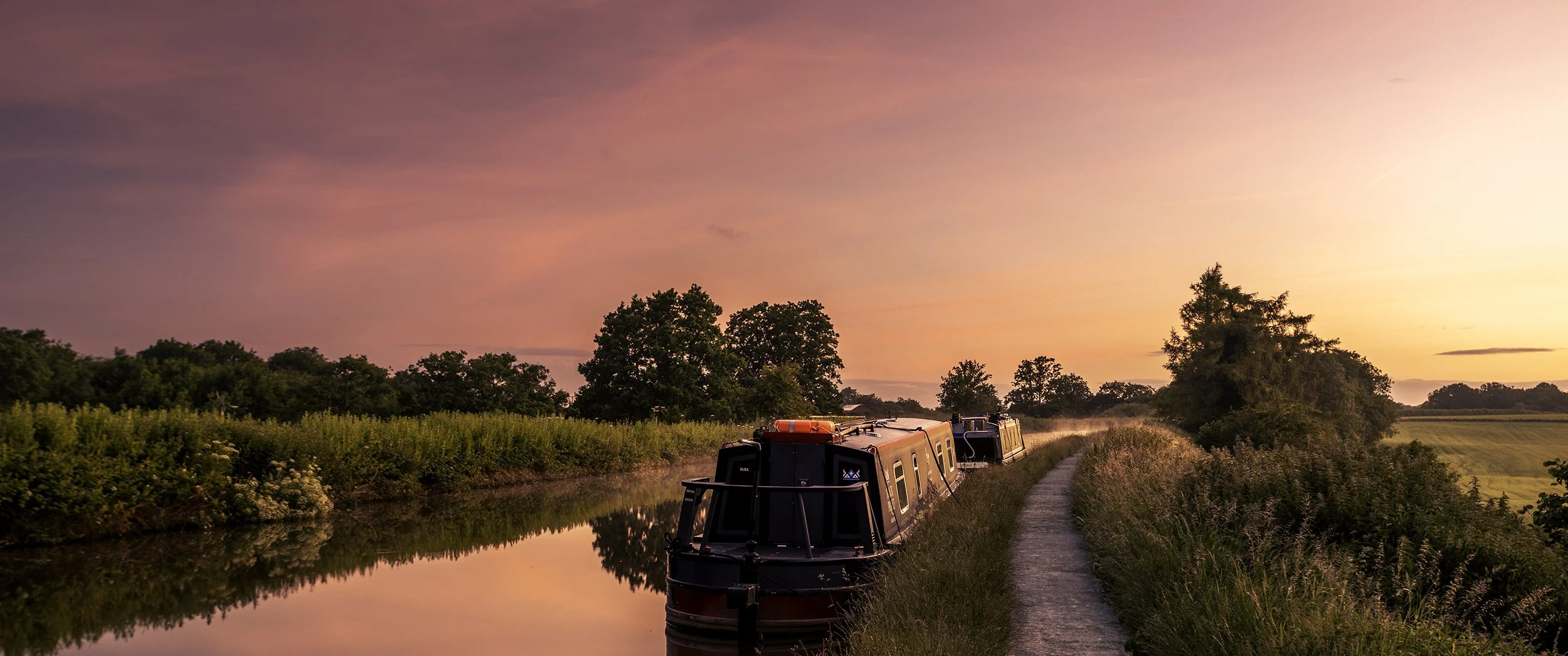
There is a specific stillness to the canal before the rest of the network wakes up. Standing on the towpath with the cool morning air on my face, watching the sunrise wash over our moored boats—it’s a reminder that the best travel experiences can't be bought; you just have to wake up early enough to catch them.
My absolute favourite image from the entire fortnight happened toward the end of our trip, and it perfectly bridges the gap between my formal landscape work and the quiet, everyday romance of the canals.
We had tied up the night before after a brutal, muscle-aching day of lock-heavy cruising, eventually retreating to the Shroppe Flyer for a couple of exceptionally well-deserved pints.. I woke up at 4:00 AM, slipped my boots on, and crept out of the cabin, leaving Jayne fast asleep inside. The world was utterly, beautifully quiet. The wind from the day before had completely died down, leaving the canal as smooth and reflective as a sheet of dark glass.
I set up the Canon R on a low wall along the towpath, looking down the length of the cut. I was entirely on my own, save for a rather sleepy mallard drifting nearby. Within minutes, the sun began to lift over the horizon, and the sky erupted into a breathtaking palette of deep pinks, soft lavenders, and burning orange.
Because the water was so still, the canal mirrored the morning sky perfectly. It looked as though our boat, and the one moored just ahead of us, were floating on a river of liquid gold and strawberries, sandwiched between the dark, silhouetted walls of the canal banks and the overhanging canopy of trees.
What I love about this photograph is the absolute stillness it conveys. It doesn't show the aching shoulders, the muddy knees, or the rain that had been down my collar the day before. It shows the quiet, spectacular reward that waits for you if you’re willing to climb out of a warm sleeping bag while the rest of the world is still dreaming. It represents the ultimate peace of the canals—just you, the water, and the sky.
Things Nobody Tells You
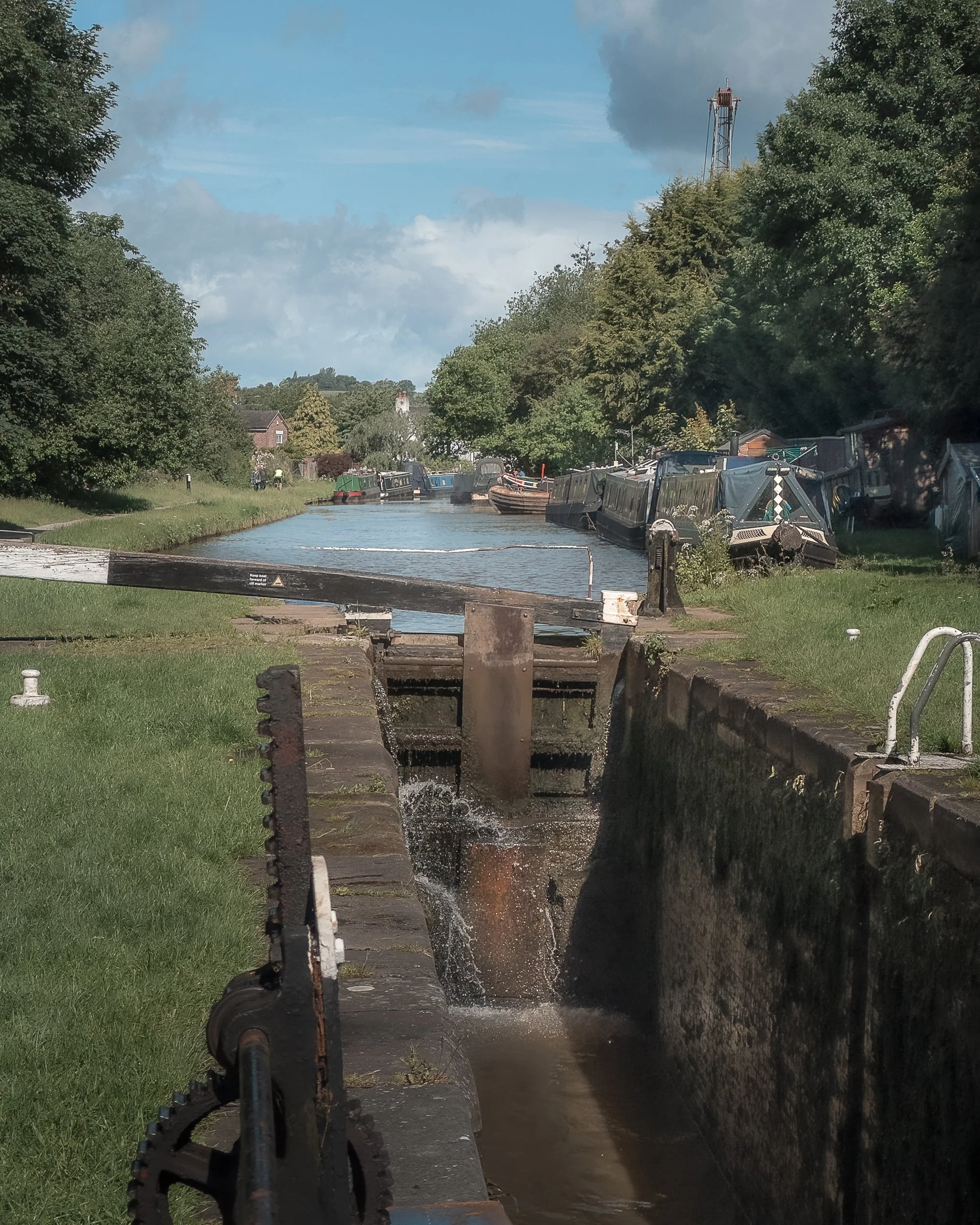
Looking down into the chamber. They tell you canal holidays are a great way to clear your head and de-stress. I find nothing clarifies the mind quite like standing on a narrow wooden plank over a twelve-foot watery drop, desperately hoping your boots have decent grip.
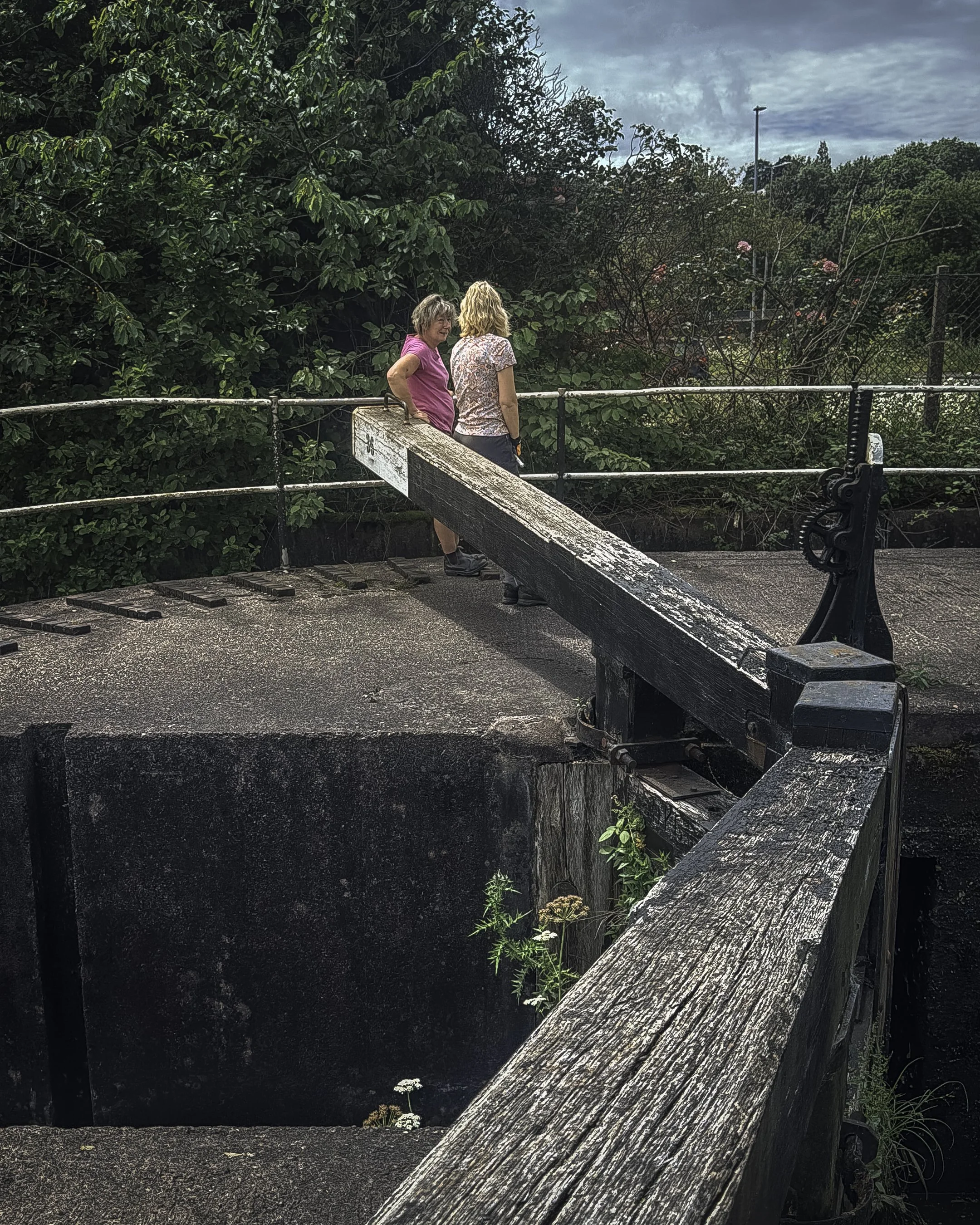
Jayne waiting for the chamber to fill. This photo gives you a proper look at the sheer scale of these lock beams. You don't push them with your arms unless you want a trip to the osteopath; you plant your backside against the wood and drive hard with your legs.
If you are thinking of booking a narrowboat holiday, let’s bypass the glossy brochures and talk about the actual physical reality.
The Physical Toll: Shifting a three-ton oak lock gate that hasn't been oiled properly since 1974 requires serious leg and back work. You don't push with your arms; you plant your backside against the beam and drive with your legs. By day four, you will discover muscles in your lower back and shoulders you didn't know existed.
The Steering Lag: A seventy-foot boat does not steer like a car. You push the tiller left, and about four seconds later, the bow begins to swing right. It is a game of anticipation. If you overcorrect, you will wind up zig-zagging down the cut like a drunken sailor.
The Mooring Mystery: Never try to find a mooring spot after 5:00 PM. The canal network is competitive. By 4:00 PM, the prime spots near the pubs are gone. Aim to tie up by 3:00 PM. You get the best choice, and you can sit on the stern deck with a cold drink, watching the latecomers sweat as they try to reverse into a gap the size of a tea tray.
The Wind is Your Enemy: A narrowboat has a flat bottom and draws only two feet of water; it acts like a giant steel sail. A strong crosswind will push you into the reeds faster than you can yell "reverse." If it's blowing a gale, just stay moored and go to the pub.
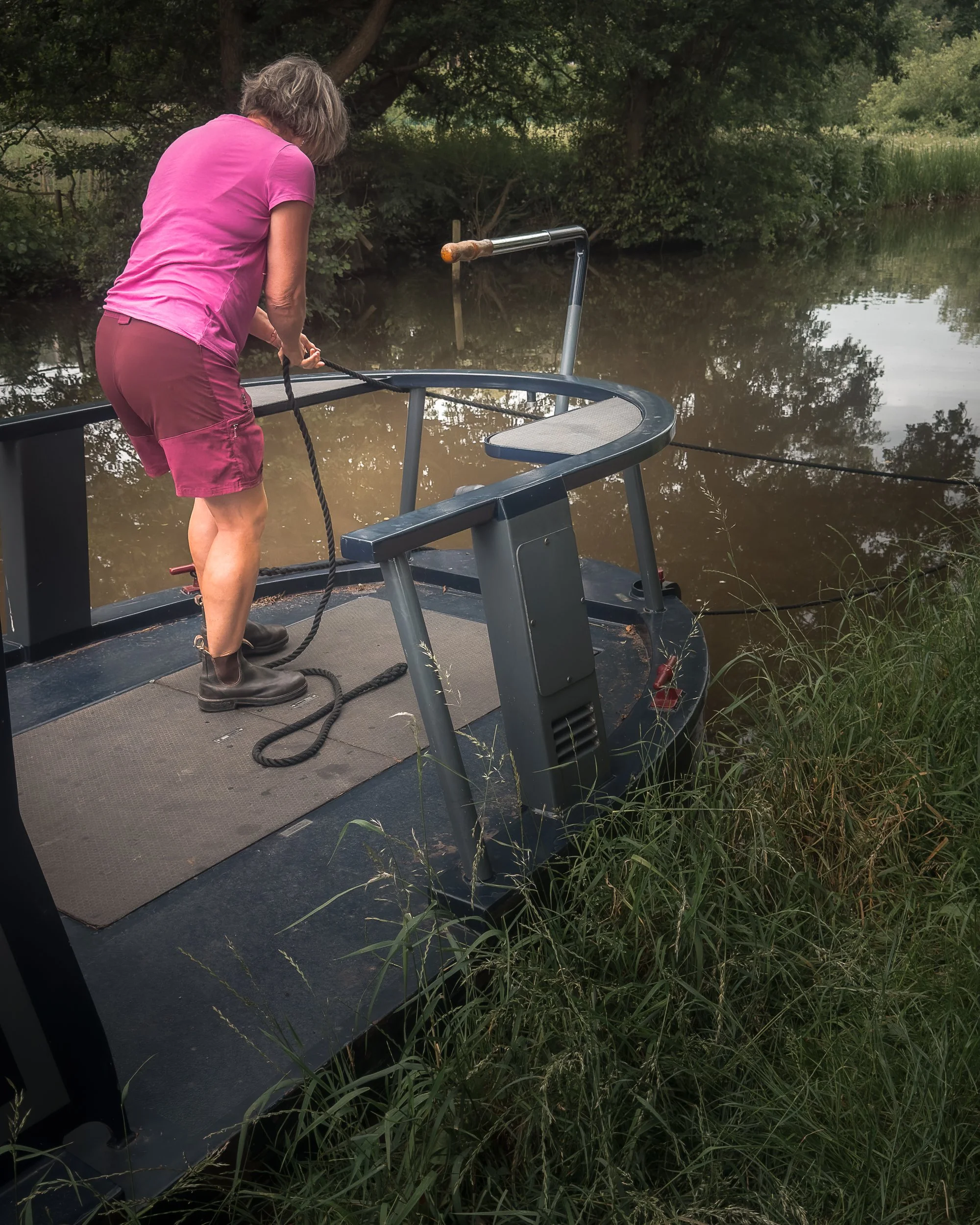
The glamour of the cut. No elegant, white-gloved deckhands here—just Jayne on the bow, wrestling twenty tons of steel against an overgrown, muddy bank so we can secure the lines before tea time.
Dave’s Ratings
Photography: ⭐⭐⭐⭐ (Incredible details, reflections, and textures, though the lack of high vantage points restricts grand vistas.)
Walking: ⭐⭐⭐⭐⭐ (The flat towpath is a walker's paradise. Miles of traffic-free, easy walking right on your doorstep.)
Food: ⭐⭐⭐⭐⭐ (Largely dependent on country pubs, but we found some absolute gems serving incredible, hearty food like run-bunny Scotch eggs and towering meat pies.)
Coffee: ⭐⭐⭐ (Some lovely independent canal-side cafés, but you'll need to seek them out.)
Pub: ⭐⭐⭐⭐⭐ (This is where the canal system shines. Historic, brick-built inns with water-side gardens and local ales are plentiful.)
Dog Friendly: ⭐⭐⭐⭐ (Brilliant for dogs who love walking, but leave water-frenzied dogs at home unless you want constant drama.)
Accessibility: ⭐⭐ (Stepping onto a moving boat, climbing lock ladders, and uneven towpaths make this a challenge for those with mobility issues.)
Value: ⭐⭐⭐ (Narrowboat hire isn't cheap, but when you factor in accommodation, transport, and entertainment in one, it’s fair.)
Would I Return?: Absolutely. The slow pace is addictive.
The Exit
On our final evening, we tied up outside a quiet, Plume of Feathers at Barlestone.. The water was perfectly still, reflecting the warm, orange glow of the pub’s leaded windows. We sat on a damp wooden bench on the towpath, the cool evening air settling over our shoulders, nursing a couple of well-earned pints of local bitter.
We didn’t feel the need to tally up the miles or brag about the ninety locks we’d conquered. My hands were calloused, my back was stiff, and my shoulders were aching. But my mind was quieter than it had been in years.
There is a unique magic to the canals. They don't offer the dramatic peaks of the Highlands or the wild surf of the Glamorgan heritage coast. Instead, they offer something far rarer in the modern world: the gift of absolute, unhurried time.
People often ask whether canal boating is suitable for people in their sixties and seventies. Speaking from experience, I'd say yes, provided you're reasonably fit and happy to take things at your own pace. I'm 69, Jayne is 67, and we both muck in with the boating. That said, don't underestimate the locks. They're not difficult, but they can be hard work. Some of the lock gates seem to weigh as much as a small house, and the paddles soon remind you that muscles you haven't used for years still exist. One day we tackled a flight of 26 locks. By the time we'd finished, we'd certainly earned our evening meal and the first pint tasted better than any I'd had in weeks. Canal boating isn't a lazy holiday. It's surprisingly physical, wonderfully satisfying, and there's a real sense of achievement every time the boat rises or falls and the gates swing open for the next stretch of water.
If you are sitting on your sofa, wondering if you’ve still got the energy for an adventure like this, my advice is simple: pack your waterproofs, leave your watch at home, and go. Your knees might complain, but your soul will thank you.
For those interested in the actual boat hire website, the route breakdown, the costs, and the pubs that tolerated us along the way, the practical notes can be found on our hidden Canal Trip Logistics Page.
The Kettle's Always On
If you've enjoyed this journey, have a question about the walk, fancy one of the photographs as a print, want to join me on a future adventure, or simply know somewhere I should explore next, I'd love to hear from you.
📧 Email Dave and let's start the conversation. After all, every adventure begins with someone saying, "Have you ever been to...?