
Dodging Tides, Throwing Stones, and Chasing Light: A Heritage Coast Shoot
I've often wondered what people think when they walk past me on the Heritage Coast.
There's a bloke standing ankle-deep in seawater, talking to himself, staring at a tripod, wiping his lens every thirty seconds and glancing nervously at the tide.
They probably assume I've lost something.
I have.
My common sense.
Because while everyone else is enjoying a pleasant evening stroll or a pint, I'm trying to persuade the Bristol Channel not to wash several thousand pounds' worth of camera gear out to sea. Tripod balanced on slippery limestone. Camera pointing at a rock. One eye on the sunset. One eye on the incoming tide. And somewhere behind me, Toby wondering why on earth I'm staring into a camera instead of throwing another stone.
Priorities, Dave.
As always, Toby came along as Head of Quality Control. His job description is quite simple. Find the biggest, slimiest stone within fifty yards, drop it on my foot, bark until I throw it, then look thoroughly unimpressed when I stop to clean salt spray off the lens.
He's a hard boss to please.
Same Coast. Completely Different Story.
I spent two evenings on the Glamorgan Heritage Coast, just twenty-four hours apart.
Same cliffs.
Same rocks.
Same dog.
Completely different photographs.
It's one of the reasons I never get bored of this coastline. People often ask why I keep returning to the same places. The answer is simple.
Because they never look the same twice.
Night One - Racing the Tide
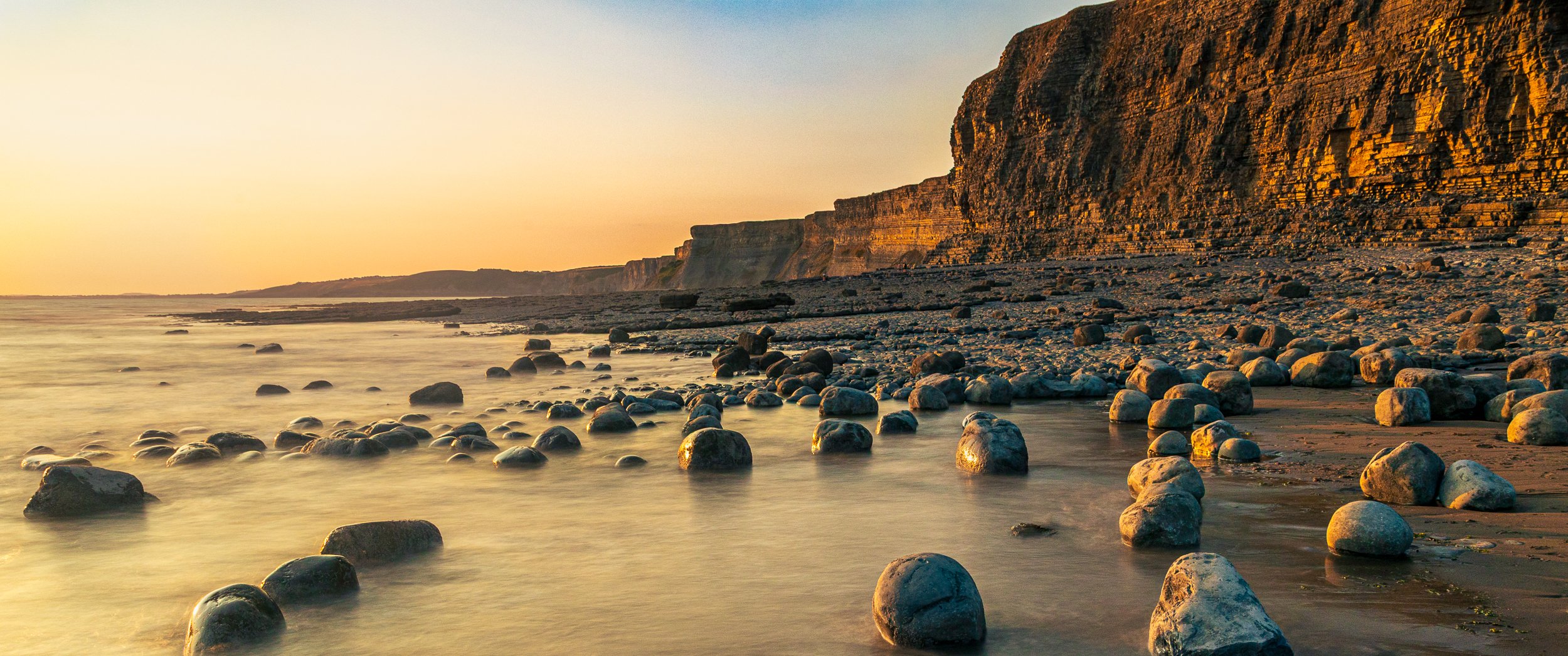
Golden light, ancient cliffs and a falling tide. Some evenings the Heritage Coast doesn't need dramatic skies, it simply lets the landscape do the talking.
The forecast looked perfect.
Clear skies.
A falling tide.
Golden light.
What could possibly go wrong?
Well... the Bristol Channel had other ideas.
I headed down onto the lower rocks where the retreating tide exposes those beautiful smooth boulders that make perfect foregrounds. A two-second exposure softened the waves beautifully... when the waves actually gave me chance to press the shutter.
Every few minutes a rogue wave charged further up the beach than the one before, soaking my boots and forcing me to perform what could best be described as an elegant backwards shuffle with a tripod.
Meanwhile Toby was standing there holding another stone.
Apparently my photography wasn't nearly as important as his fetch schedule.
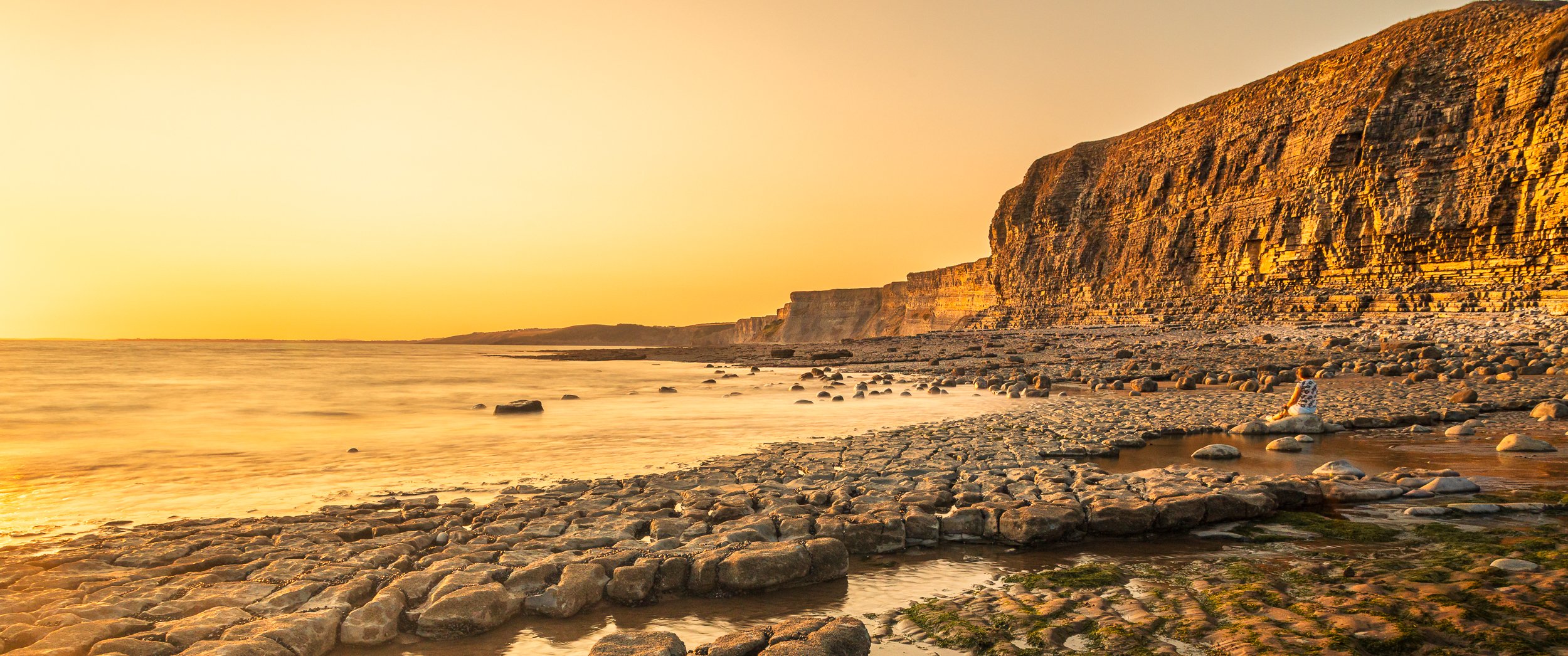
Sometimes the best way to appreciate the Heritage Coast is simply to stop, sit down and let the evening light do the talking. The cliffs have been here for millions of years. They can wait a few more minutes for us.
Know When You've Lost
Eventually the sea won.
It always does.
Rather than arguing with several million tonnes of water, I retreated onto the higher limestone ledges.
Funny thing is, that's when I found some of my favourite photographs.
The low sun skimmed across the wet limestone, lighting every crack, pool and ripple in the ancient rock. Everything glowed like polished bronze.
Sometimes the best composition isn't where you planned to stand.
It's where the tide forces you to stand.
Turn Around!
One of the biggest mistakes photographers make is staring straight at the sunset.
I nearly did exactly that.
Luckily I turned round to check where Toby had wandered off to.
The cliffs behind me were on fire.
Warm evening light had transformed the grey limestone into glowing orange layers, while patches of bright green seaweed added just enough colour to lift the whole scene.
Lesson learned.
Always look behind you.
Nature doesn't care where you're pointing your camera.
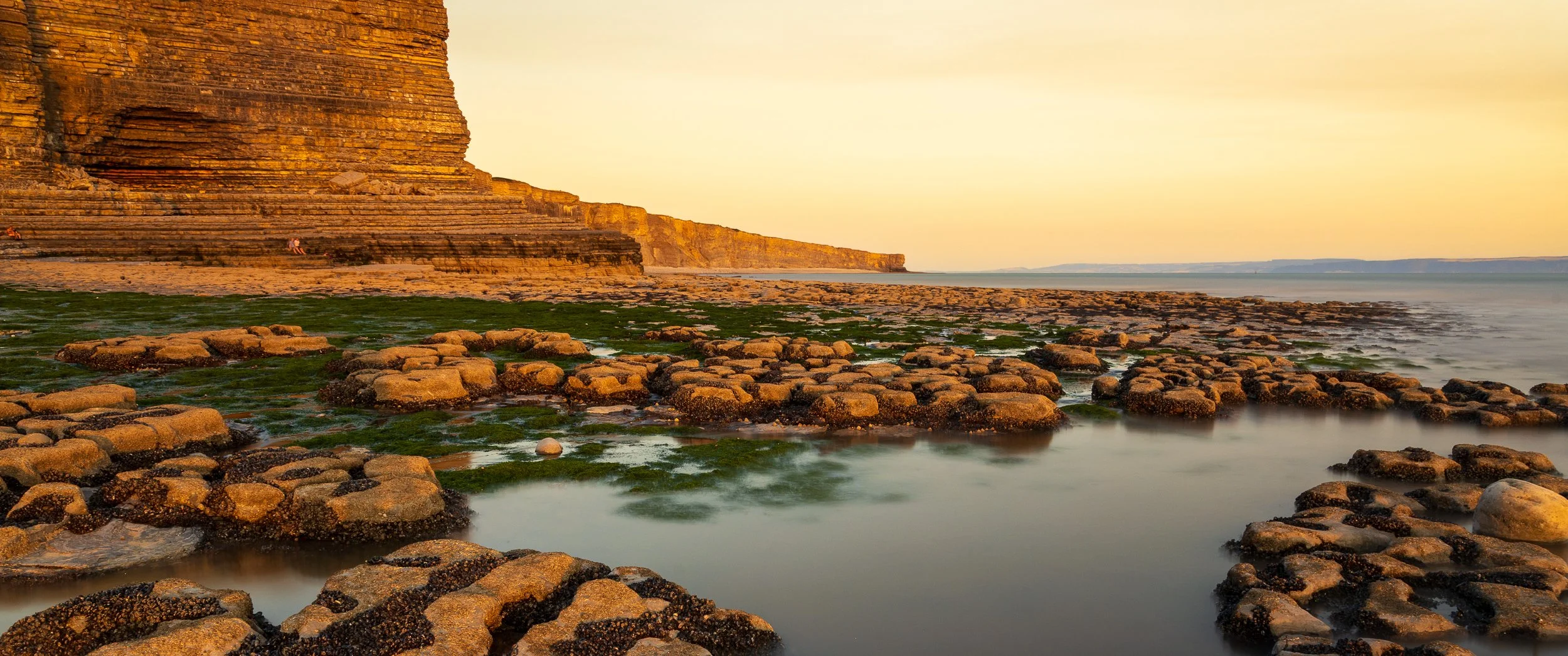
I was so focused on photographing the sunset that I almost missed this. Turning around, I found the evening light catching the limestone cliffs, revealing every layer, ledge and fold in the rock. It's a reminder I keep learning on the Heritage Coast: the best photograph isn't always where the sun is. Sometimes it's the one behind you.
One Last Shot Before the Scramble
Just before packing the kit away to tackle the scramble back over the slippery rocks before our exit path got cut off by the tide, I grabbed one last standard 3:2 frame facing straight into the final glow of the setting sun.
The sun was dipping right next to the edge of the headland, casting long, dramatic shadows that stretched all the way across the wet beach. The light was changing by the second, shifting rapidly from bright, metallic gold to a much deeper, softer crimson-orange. It was the perfect spot to stop shooting, let the camera sensor cool down, and start thinking about heading back up the cliff path before the tide claimed the rest of the rock ledges.
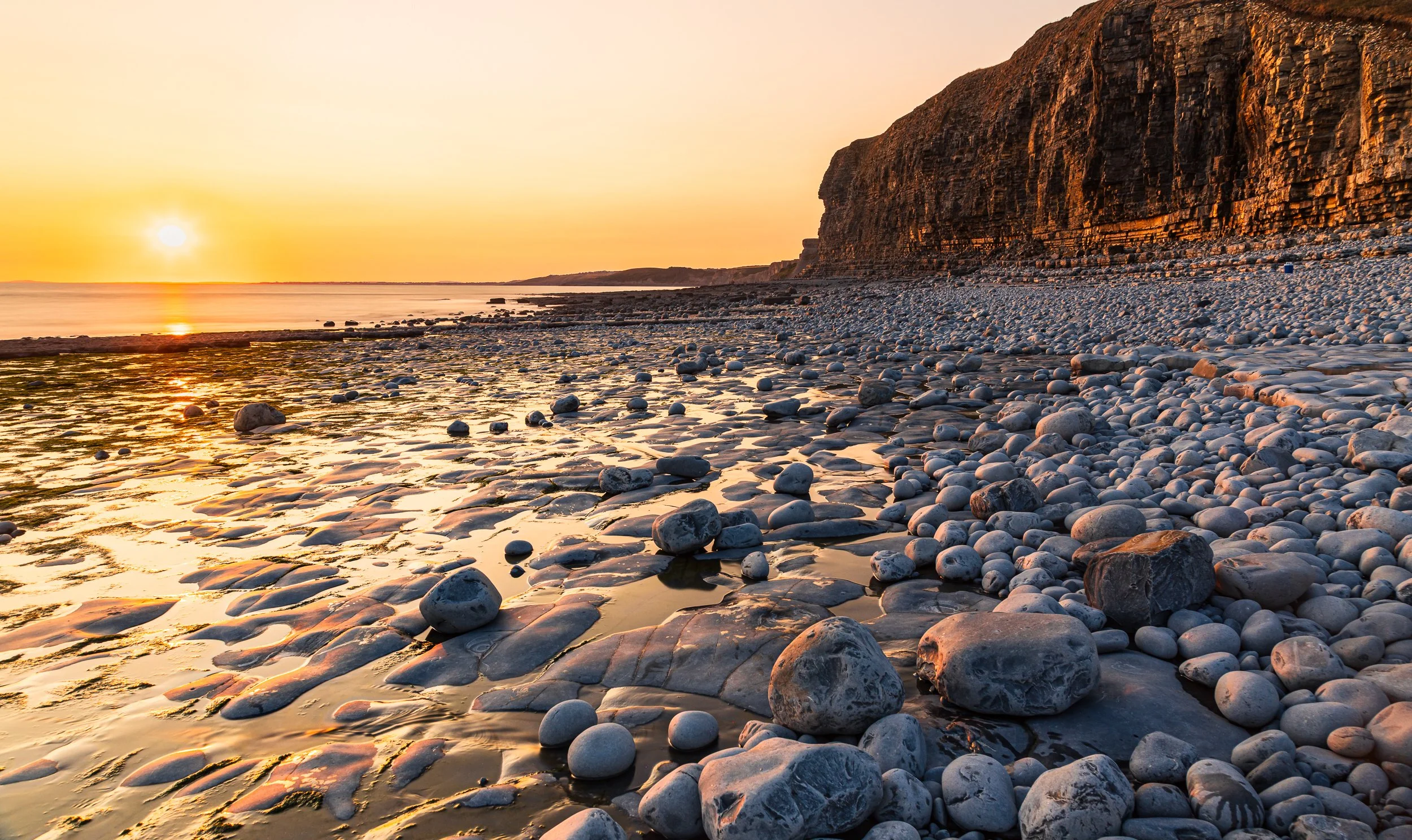
With the tide slipping away, the limestone pavement and rounded boulders became the perfect leading lines towards the setting sun. Sometimes the Heritage Coast quietly builds a photograph for you... all you have to do is slow down and notice it.
Twenty-Four Hours Later...
The following evening Toby and I returned.
Same beach.
Different mood entirely.
Instead of dramatic golds, the coast was bathed in soft pastel colours. The tide was higher, the shadows gentler and the whole place felt calm.
Instead of fighting waves around individual rocks, the sea washed across the limestone shelves, leaving beautiful ribbons of white foam that worked perfectly with a half-second exposure.
It reminded me that landscape photography isn't about collecting locations.
It's about collecting moments.
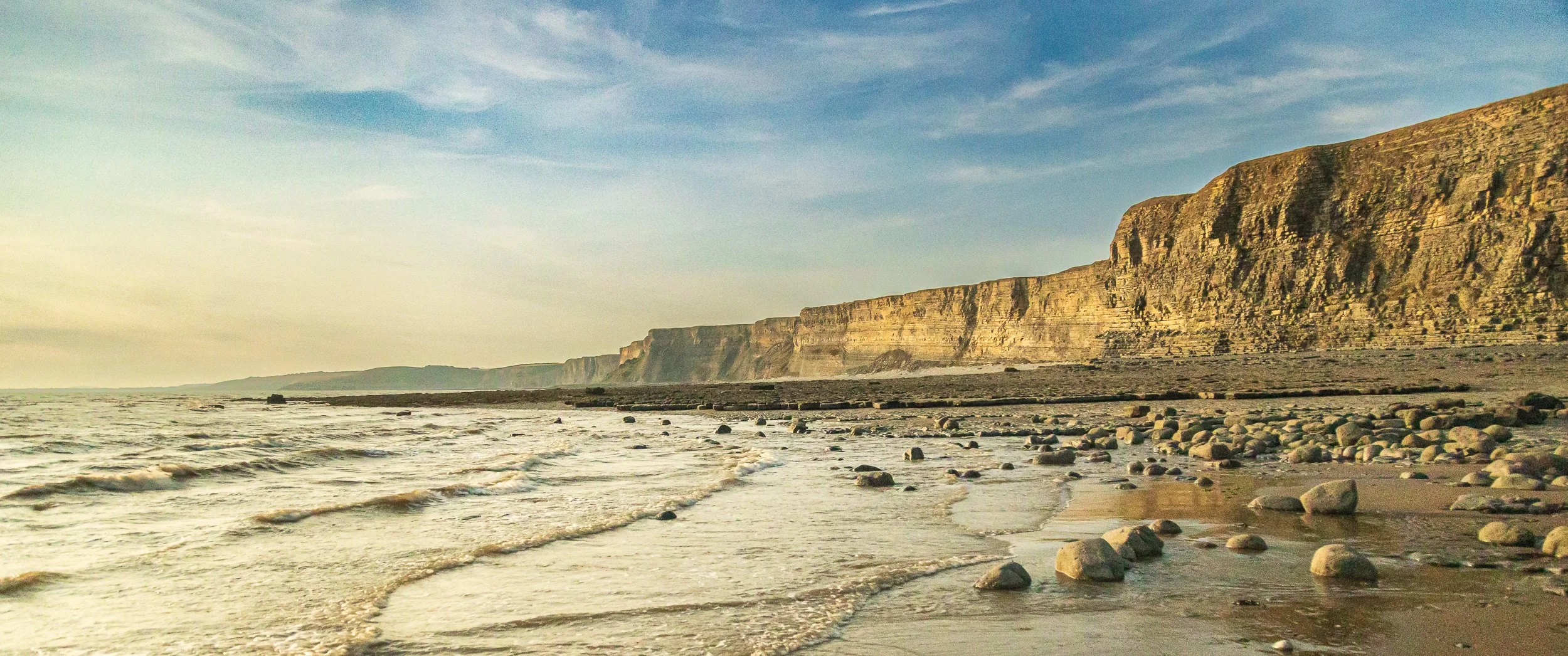
Not every coastal photograph needs a tripod. Sometimes a handheld shot captures the mood far better, freezing the small waves as they lap gently across the shore while the evening light washes over the cliffs.
Three Things the Coast Keeps Teaching Me
The tide changes everything.
Low tide gives you foreground rocks and pools. High tide gives you sweeping lines and moving water. It's almost like photographing two different places.
Don't chase the brightest light.
The best light often isn't where the sun is. Turn around. Look behind you. Look sideways.
The sea always wins.
No photograph is worth getting cut off by the tide. If the water says it's time to move, move.
The Important Final Stop
Once the camera was packed away and the rocks disappeared beneath the tide, there was only one sensible destination.
The Plough and Harrow.
A couple of well-earned pints.
A tired Labrador asleep under the table.
And me scrolling through the evening's photographs while wondering whether I'd actually captured what I'd seen.
That's the thing about landscape photography.
The pictures matter.
But they aren't the whole story.
The smell of the sea.
The sound of the waves.
The scramble over slippery rocks.
The dog demanding one last throw.
The pint afterwards.
That's what I remember most.
The photographs simply help me tell the story.
Until next time...
Hopefully with drier boots.
Have a comment, a question, or a bit of advice? Drop me an email. I’d love to hear what you think.
If you've made it this far, thank you for coming along on the journey. I always enjoy hearing what people think, whether it's about the photographs, the stories behind them or your own experiences along the Heritage Coast. If you've got a question, a comment, a bit of advice, or you just fancy saying hello, click the button below and send me an email. I read every message and do my best to reply to them all. You never know, your idea or suggestion might even inspire the next adventure.